


Hello everyone. “After 40, not eating breakfast is a gateway to getting a flat butt,” writes Ashley Damaj, in this week’s essay.
The conversation around diet is louder than ever. GLP-1 has put focus on proteinmaxxing, macros are no longer reserved for bodybuilders, and marathoners hyperfixate on carbs. Today, food tracking apps are aplenty, while wearables can tell you your daily caloric expenditure, and there’s a wealth of nutritionists and content creators on Instagram offering recipes, instructions and guidance. It’s not just what to eat, but how to eat, that’s trending.
All this is a far cry from the diet culture of the Nineties and early Aughts, where women were sold fat-free diets, cereal diets and juice cleanses. Weight Watchers labelled certain foods as ‘syns’, implying eating was sinful. Slim Fast offered low-calorie milkshakes as meal replacements. Back then, the narrative around food was problematic.
As a culture, we’ve largely moved on. Avocado became a viral food that single-handedly changed the perception of fats. Suddenly, there were good fats and bad fats. Good fats became desirable.
So why is it that so many women still skip breakfast? When the Miami-based nutritionist Ashley Damaj, founder of Mothership Wellness, first spoke to us about this, we knew we had to commission her to write this story. In her practice, she helps women break free from this negative food loop.
The fact is this: Fueling on two meals a day simply is not enough.
Stay nourished.
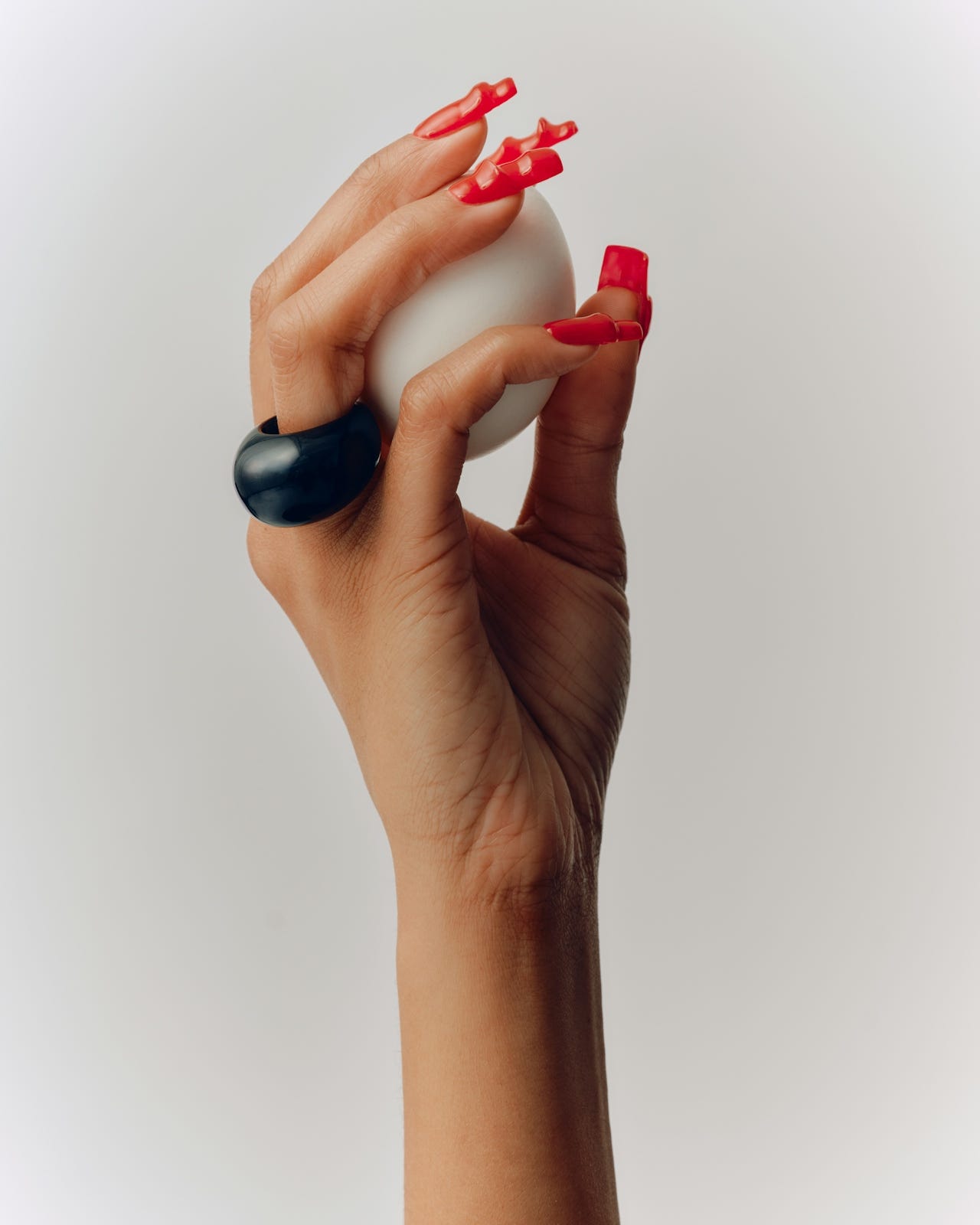
DTS Studio. Image rights courtesy Danimás.
SKIPPING BREAKFAST IS RUINING YOUR GAINS
By Ashley Damaj
In 1850s England, fainting rooms were the height of vogue for the Victorians, who laced women so tightly into corsets that they struggled to breathe—and eat. Their restricted blood flow and lack of fuel caused dizziness and actual fainting. The fairytale goes that women are weak and in need of rescue; the reality is that fragility, starvation, and deprivation have been masquerading as femininity and status for centuries. Atkins and the Skinny Bitch era of the aughts rendered it anew.
In 2025, the ripple effects are real. The idea that women eat less is now mainstream. Decades of fad diets, fat-free marketing, and dystopian attitudes have normalized skipping breakfast. For many young women, it falls off the agenda as early as high school, and it remains the most common strategy to reduce overall caloric intake. As adults, breakfast is a relatively low stakes meal to skip because we can coast on caffeine until our body responds to its need for fuel with jittering fervor.
Women who workout know that they need to fuel their bodies. They know you get out what you put in: Keep progressive overloading, and you’ll lift a heavier dumbbell. Keep doing sprints on the treadmill, and your heart rate will lower. But breakfast is the apple that still falls far from the tree. It’s a part of toxic diet culture that many women still need to overcome.
As a certified nutritionist, personal trainer, behavioral therapist, and the founder of Mothership Wellness, a holistic coaching service based in Newport Beach, California, I hear women dress up skipping breakfast by calling it intermittent fasting. Others say they simply aren’t hungry in the morning. That’s usually a sign of one of three things: a poor metabolism, medication (to treat ADD or a GLP-1), or inadequate muscle mass. A well-muscled woman who doesn’t binge at night is always hungry after sleeping. So I am here to tell you this: Women, stop skipping breakfast. It’s ruining your gains.
Think of it this way. Cardio is like earning hourly wages: effort in, results out. Strength training is like earning a salary: Your muscles keep paying long after you’ve clocked out for the day. Breakfast is not an end-of-year bonus. Breakfast is gasoline. It’s the thing that keeps your car engine running to get you to work; the power that keeps your office and your home’s lights and heating on.
“Your glutes won’t grow themselves. You have to feed them.”
Fasted workouts are damaging for a number of reasons. For women, it causes your hormones to go haywire. When we are underfed, our blood sugar tanks. Low blood sugar spikes cortisol and adrenaline. Yes, those same stress hormones that make you snappy, impatient, irrational, dizzy, and faint, much like the Victorians. I suffer similar symptoms when I am prepping for bodybuilding competitions—a reality my husband and children are all too aware of. The verdict is this: The human body doesn’t like to be underfueled, and when it is, consequences occur. Poor sleep and other peri/menopausal realities compound the symptoms. “Hangry” is, in fact, clinical.
If you train without food, your body is working overtime to perform simple exercises and the lifts it is more than capable of doing. If your energy stores are depleted, your body fatigues quicker, which restricts the intensity of your workout because you’re running on low. If gains are your goal, you’re at risk of impairing your build as your body turns to lean muscle for energy, instead of fat. It impacts your recovery. And the cycle begins again the next day.
Eating less sabotages us aesthetically the older we get. After 40, skipping breakfast is a gateway to a flat butt. Those glutes won’t grow themselves; you have to feed them. My favorite epiphany, and the one I love to hear from my clients is this: “I never knew I could eat this much and get my body to look like this.”
Starting your day with protein to feed your muscles is key. It sets you up for stable blood sugar, steady energy, and wards off irritability. If you want to still fast, eat dinner by 7 pm and eat breakfast at 7 am. If your brain no longer sends you hunger cues in the morning, we need to start rebuilding your metabolism. Think: light but intentional. Fruit is not breakfast by itself.
If it truly makes you nauseous to think about fueling pre workout, eat a half banana or a date with a scoop of essential amino acids mixed into water or coffee—this can help blunt the cortisol response, stabilize blood sugar, and preserve muscle by stimulating muscle protein synthesis even in the absence of a full meal. Alternatively, mix up a protein shake with coconut milk; to add carbs, include a cup of oats or a banana. It doesn’t need to be complicated.
After your workout, I load up with a large post-workout meal of about 40 grams protein and 40 grams carbs. I like a non-fat Greek yogurt, and add ground flax seed, blueberries, and a sprinkle of dried goji berries, finished with Maldon sea salt. On rest days, or if you’re working out later in the day, I’d suggest having overnight oats with a double serving of protein and cardamom to season, plus lots of nuts, seeds, and berries for healthy fats and antioxidants.
Mastering the art of eating first thing in the morning can be challenging. But it has the benefit of keeping your eating on track for the rest of the day. So many women accidentally overeat or under eat. Busy working mom life can cause food to get backloaded to the end of the day and make it easier to justify 5 pm wine and suboptimal macros for dinner. This also affects your gains. Having a routine and sticking to it will give you more time, more energy, and more control.
We’re meant to be strong, well-fed, and fully awake in our own power. The era of glorified fragility is over, and it’s time to eat and train like we run the world: because we do.